Destinations
Journey Details
The Journey
Day 1: Pickup from Entebbe Airport and Transfer to Lodge
Welcome to Uganda, the Pearl of Africa. Upon arrival at Entebbe International Airport, you will be welcomed by a professional Enjobe Safaris driver-guide holding a personalised welcome sign.
After completing immigration procedures and collecting your luggage, you will receive assistance before transferring to your selected lodge in Entebbe.
The drive from the airport will be short, allowing you to settle in comfortably after your international journey. Depending on your arrival time, you may spend the remainder of the day relaxing at the lodge, walking around the surrounding area or preparing for the adventure ahead.
Your driver-guide will provide a short briefing about the safari, including the planned departure time for the following morning. Dinner and overnight will be at your selected lodge in Entebbe.
Day 2: Mabamba Shoebill Excursion and Entebbe Botanical Gardens
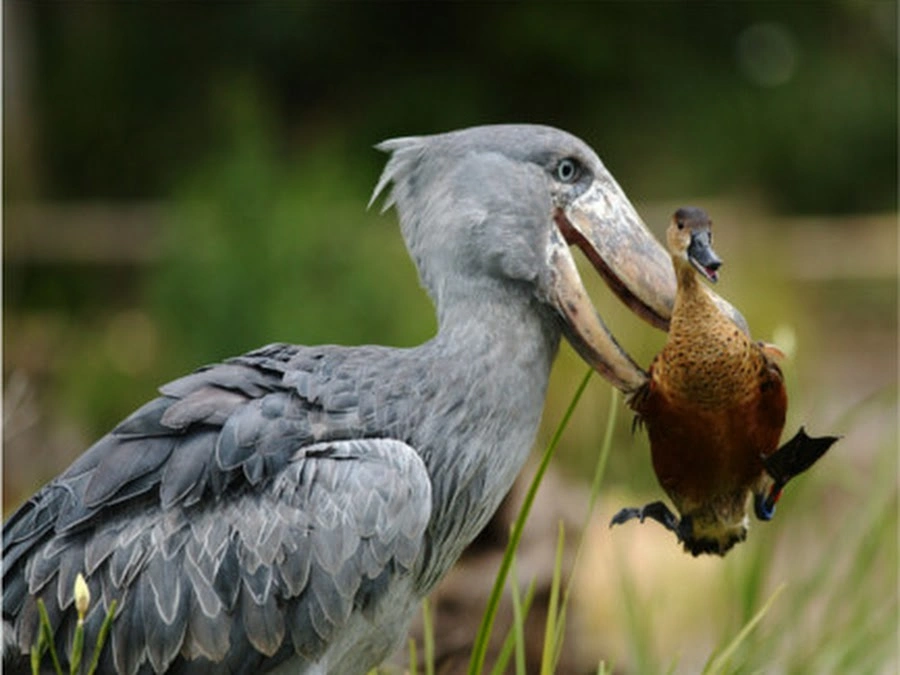
After breakfast, you will travel to Mabamba Bay Wetland for a guided shoebill-searching experience. Mabamba is a vast papyrus wetland located near Lake Victoria and is one of Uganda’s best-known places to search for the rare shoebill.
Upon arrival, you will meet an experienced local birding guide and board a traditional canoe. You will slowly navigate through narrow channels surrounded by papyrus, water lilies and floating vegetation while searching for the shoebill and other wetland birds. Possible bird sightings include African jacanas, pied kingfishers, malachite kingfishers, purple herons, African fish eagles, egrets and cormorants. Although shoebill sightings cannot be guaranteed, the peaceful canoe excursion and rich wetland birdlife make Mabamba an unforgettable experience. After the excursion, you will return to your lodge in Entebbe for lunch and a short rest.
In the afternoon, you will visit Entebbe Botanical Gardens. The gardens contain tropical trees, medicinal plants, open lawns and sections of natural forest near the shores of Lake Victoria. During the guided walk, you may encounter black-and-white colobus monkeys, vervet monkeys and several forest and waterbird species. After the visit, you will return to your lodge for dinner and overnight stay.
Day 3: Transfer to Murchison Falls with Birding Stops Along the Route
After an early breakfast, you will leave Entebbe and begin the journey to Murchison Falls National Park.
This is not simply a transfer day. Your specialist guide will make carefully selected birding stops along the route according to seasonal conditions, recent sightings and the group’s priority species. The journey passes through urban edges, farmland, wooded grassland, seasonal wetlands and roadside bush, providing opportunities to add a variety of common and localised species to your list. Possible roadside sightings may include Grey Crowned Crane, African Openbill, Black-headed Heron, Yellow-billed Stork, Black Kite, Lizard Buzzard, Grey Kestrel, Piapiac, African Pied Hornbill and several species of bee-eaters, rollers, weavers and widowbirds.
Your guide may also stop around suitable wetlands, cultivated fields and woodland patches where it is safe and permitted to do so. Lunch will be enjoyed along the route. As you approach Murchison Falls National Park, the landscape gradually changes to woodland and open savannah. Depending on the arrival time, you may begin birding immediately after entering the park. Possible introductory species include Abyssinian Ground Hornbill, Black-billed Wood Dove, Spotted Palm Thrush, Black-headed Gonolek and Red-cheeked Cordon-bleu.
You will proceed to your lodge in the late afternoon or early evening.
Day 4: Full-Day Savannah and Woodland Birding in Murchison Falls
After an early breakfast, you will begin a full day of birding across the savannah and woodland habitats of Murchison Falls National Park.
The cooler morning hours are particularly rewarding for bird activity, vocalisations and the possibility of observing raptors hunting over the plains. Your guide will explore productive routes through open grasslands, Borassus palm country, woodland, thickets and seasonal wetlands. Priority species may include Abyssinian Ground Hornbill, Denham’s Bustard, Black-headed Lapwing, Senegal Thick-knee, Heuglin’s Francolin, Spotted Morning Thrush, Silverbird, Northern Red Bishop, Black-billed Barbet and Chestnut-crowned Sparrow-Weaver.
Other possible sightings include Black-chested Snake Eagle, Bateleur, Martial Eagle, Grey-headed Kingfisher, Swallow-tailed Bee-eater, Northern Carmine Bee-eater, White-fronted Black Chat and Foxy Cisticola. The game-drive format allows you to cover a large area while stopping regularly to listen, scan trees, study mixed flocks and photograph birds.
Although the day is dedicated to birding, you may also encounter elephants, giraffes, buffaloes, antelopes, lions and other wildlife while exploring the park. Lunch may be enjoyed at the lodge or at a suitable picnic location, depending on the selected route. Birding will continue during the afternoon as temperatures cool and bird activity increases.
Murchison Falls is recognised by the Uganda Wildlife Authority as one of Uganda’s leading birding destinations, combining extensive savannah, woodland, riverine and wetland habitats
Day 5: Nile Delta Boat Birding and Transfer to Budongo Forest
After an early breakfast, you will transfer to the River Nile for a specialist boat-birding excursion towards the Nile Delta.
The delta area, where the Victoria Nile approaches Lake Albert, supports papyrus, open water, shallow wetlands, floating vegetation and productive riverbanks. This excursion provides another opportunity to search for the shoebill while also targeting a wide variety of waterbirds and wetland specialists. Possible species may include Goliath Heron, African Fish Eagle, African Skimmer, Saddle-billed Stork, Senegal Thick-knee, African Jacana, Long-toed Lapwing, Grey-headed Kingfisher, Giant Kingfisher, Pied Kingfisher and various herons, egrets, cormorants and terns. The boat will move slowly through productive areas while your guide scans the shoreline, papyrus stands, exposed sandbanks and floating vegetation. After the boat excursion, you will return to the lodge or another suitable location for lunch.
You will then leave Murchison Falls and transfer to the Budongo Forest region. Depending on your arrival time, you may enjoy a short late-afternoon birding session around the forest edge or lodge grounds. This introductory forest birding may reveal White-thighed Hornbill, Black-and-white-casqued Hornbill, African Pied Hornbill, Yellow-spotted Barbet, Western Nicator and several species of greenbuls. You will later check in at your lodge for dinner and overnight
Day 6: Royal Mile and Busingiro Birding in Budongo Forest
After an early breakfast, you will travel to the Royal Mile for a full day of specialist forest birding. The Royal Mile is one of Uganda’s most celebrated birding trails. Its broad forest track and relatively open understory provide excellent opportunities to observe and photograph species associated with the Budongo Forest ecosystem.
Your guide will listen carefully for calls and scan the forest canopy, middle levels and understory for mixed feeding flocks. Priority targets may include Chocolate-backed Kingfisher, Blue-breasted Kingfisher, African Dwarf Kingfisher, Ituri Batis, Chestnut-capped Flycatcher, Yellow-footed Flycatcher and Nahan’s Partridge. Other possibilities include White-thighed Hornbill, Black-capped Apalis, Rufous-crowned Eremomela, Fire-crested Alethe, Spotted Greenbul, Yellow-browed Camaroptera, Lemon-bellied Crombec, Western Black-headed Oriole and Cassin’s Spinetail. Birding requires patience, silence and careful listening because many forest species remain concealed within the vegetation. Lunch may be enjoyed as a packed meal near the birding area.
During the afternoon, you will explore the Busingiro section or another productive area of Budongo Forest. Busingiro offers opportunities to search forest-edge habitat, canopy openings and quieter trails for species that may have been missed during the morning. The Royal Mile is particularly associated with sought-after forest species including Chocolate-backed, Blue-breasted and African Dwarf kingfishers, Ituri Batis and Chestnut-capped Flycatcher
Day 7: Transfer to Fort Portal with Roadside and Wetland Birding
After breakfast, you will leave Budongo Forest and begin the journey towards Fort Portal. The route passes through varied landscapes, including forest edges, agricultural areas, wetlands, escarpments, villages and wooded countryside.
Your guide will make birding stops at suitable locations according to weather, road conditions and recent sightings. Possible roadside and wetland birds may include Grey Crowned Crane, African Openbill, Hamerkop, Black-headed Heron, African Wattled Lapwing, Black-crowned Tchagra, Ross’s Turaco, White-browed Coucal and various raptors, kingfishers, swallows and weavers. Forest-edge stops may provide opportunities for Great Blue Turaco, African Emerald Cuckoo, Yellow-rumped Tinkerbird, Black-and-white-casqued Hornbill and several species of greenbuls and sunbirds. Lunch will be enjoyed along the route.
You will continue towards Fort Portal, a scenic town surrounded by tea plantations, crater lakes, wetlands and rolling hills. Depending on your arrival time, you may enjoy a short late-afternoon birding session around the lodge grounds, nearby wetlands or the crater-lake region. You will later check in at your lodge for dinner and overnight
Day 8: Full-Day Birding in Semuliki National Park and Return to Fort Portal
After an early breakfast, you will leave Fort Portal and travel to Semuliki National Park for one of the safari’s most important forest-birding experiences. Semuliki protects an extensive lowland tropical forest with strong biological connections to the forests of the Congo Basin. This unique ecosystem offers birdwatchers the opportunity to search for species that are rare or absent elsewhere in East Africa. Upon arrival, you will meet an experienced local birding guide and begin exploring one or more of the park’s productive forest trails.
Depending on trail conditions, recent sightings and your target species, the day may focus on the Kirumia Trail, the Sempaya area or another suitable birding route. Priority species may include the Congo Serpent Eagle, Nkulengu Rail, Yellow-throated Cuckoo, Black-casqued Hornbill, Red-billed Dwarf Hornbill, Piping Hornbill, Maxwell’s Black Weaver and Western Bronze-naped Pigeon. Other possible sightings include the Blue-billed Malimbe, Red-rumped Tinkerbird, African Piculet, Chestnut-breasted Negrofinch, Swamp Palm Bulbul, White-crested Hornbill and several species of forest robins, greenbuls and sunbirds.
Many of Semuliki’s speciality birds are elusive, occur in low numbers or remain high in the forest canopy. Successful birding therefore requires patience, careful listening and realistic expectations. A packed lunch will be carried, allowing you to remain inside the park and continue birding during the most productive hours of the day. With more than 435 recorded bird species, Semuliki is regarded as one of Uganda’s finest birding destinations and is particularly important for Guinea–Congo forest species.
In the late afternoon, you will conclude the birding excursion and begin the journey to Kibale National Park. You will arrive at your lodge in the evening, where you can relax, enjoy dinner and review the day’s bird sightings.
Day 9: Kibale Forest and Bigodi Wetland Birding
After an early breakfast, you will begin birding in Kibale National Park. The morning will focus on suitable forest trails, roads and forest-edge habitats selected according to seasonal conditions and the group’s priority species.
Possible forest targets may include Green-breasted Pitta, White-naped Pigeon, African Grey Parrot, Black Bee-eater, Yellow-spotted Barbet, Western Nicator, Chestnut Wattle-eye and several species of greenbuls, cuckoos and forest robins. The Green-breasted Pitta is highly sought after but can be extremely difficult to locate. Sightings depend on season, vocal activity, recent records and considerable patience. Other species may be encountered in mixed feeding flocks moving through the canopy and understory. After the morning forest-birding session, you will return to the lodge or another suitable location for lunch.
In the afternoon, you will visit Bigodi Wetland Sanctuary for a guided birding walk. Bigodi combines papyrus swamp, wetland, forest edge, farmland and community-managed habitat. Possible targets may include Great Blue Turaco, Papyrus Gonolek, White-winged Swamp Warbler, White-spotted Flufftail, Yellow-billed Barbet, Snowy-crowned Robin-Chat and various kingfishers, weavers and waxbills. The walk also offers opportunities to encounter monkeys and learn how community tourism contributes to wetland conservation and local livelihoods. Bigodi is particularly known for species such as Great Blue Turaco, Papyrus Gonolek, White-spotted Flufftail and Yellow-billed Barbet.
After the birding experience in Bigodi, you will return to your selected lodge for dinner and an overnight stay.
Day 10: Transfer to Queen Elizabeth National Park and Afternoon Birding
After an early breakfast, you will leave the Kibale region and transfer to Queen Elizabeth National Park. Birding will begin during the journey, with stops around suitable crater lakes, wetlands, escarpments and roadside habitats.
Upon entering Queen Elizabeth National Park, you will explore a combination of open savannah, bushland, lakeshore, wetlands and acacia woodland. Possible savannah species may include African Wattled Lapwing, Senegal Lapwing, Crowned Lapwing, Temminck’s Courser, Collared Pratincole, Black Coucal, Rufous-naped Lark, Flappet Lark and various cisticolas. Raptors may include Bateleur, Martial Eagle, Brown Snake Eagle, Grey Kestrel and various vultures, depending on current conditions. After lunch, you may continue with birding around the Mweya Peninsula and along the shores of the Kazinga Channel.
Where included in the confirmed programme, an afternoon boat-birding excursion may provide opportunities to observe African Skimmer, African Fish Eagle, Great White Pelican, Yellow-billed Stork, Saddle-billed Stork, African Spoonbill and large concentrations of herons, egrets, cormorants, terns and kingfishers. The exact route will be selected according to water levels, seasonal bird movements and recent reports.
Day 11: Transfer to Bwindi with Birding Through Ishasha and Buhoma
After an early breakfast, you will begin birding through the southern sections of Queen Elizabeth National Park before continuing towards Bwindi Impenetrable National Park. The route will take you through the Ishasha Sector, where open grassland, fig-tree woodland, riverine vegetation and seasonal wetlands support a different collection of birds from the northern sections of the park.
Possible targets may include African Wattled Lapwing, Palm-nut Vulture, Black-crowned Tchagra, Broad-billed Roller, White-headed Barbet, Double-toothed Barbet and various raptors and savannah species. You may also encounter elephants, buffaloes, antelopes and, with good fortune, Ishasha’s famous tree-climbing lions while moving between birding locations. Lunch will be enjoyed along the route.
You will then continue to Bwindi’s Buhoma sector and begin searching for forest-edge and lower-altitude species. Possible Buhoma targets may include Black Bee-eater, Bar-tailed Trogon, White-bellied Crested Flycatcher, Grey-winged Robin-Chat, Equatorial Akalat, Black-faced Rufous Warbler and several species of greenbuls and sunbirds.
After the Buhoma birding session, you will continue towards the Ruhija sector, depending on road conditions and the location of your selected lodge.
You will arrive in Ruhija in the late afternoon or evening and prepare for the following day’s intensive montane birding.
Day 12: Full-Day Birding in Bwindi’s Ruhija Sector
After an early breakfast, you will begin a full day of birding in Bwindi’s high-altitude Ruhija sector which is one of Uganda’s most important locations for pursuing Albertine Rift endemics and montane forest specialists.
Depending on fitness, weather, trail conditions and the group’s priorities, the day may include the Mubwindi Swamp Trail or birding along alternative forest roads and trails. The Mubwindi Swamp Trail can be physically demanding, involving steep slopes, muddy paths and a long descent into the forested valley. Priority species may include Grauer’s Broadbill, Grauer’s Swamp Warbler, Rwenzori Batis, Yellow-eyed Black Flycatcher, Regal Sunbird, Stripe-breasted Tit and Rwenzori Apalis.
Other possible targets include Handsome Francolin, Dusky Crimsonwing, Archer’s Ground Robin, Red-faced Woodland Warbler, Mountain-masked Apalis, White-tailed Blue Flycatcher and Barred Long-tailed Cuckoo. Some of these birds are rare, localised, secretive or highly dependent on current feeding and breeding activity. Considerable patience may therefore be required.
A packed lunch will be carried to maximise birding time in the forest. Your local guide will use knowledge of calls, territories and recent sightings to improve the chances of locating priority species while ensuring that the group follows park regulations.
Bwindi and Mgahinga are recognised as Uganda’s most accessible protected areas for pursuing Albertine Rift endemics
Day 13: Mgahinga Montane and Albertine Rift Birding
After an early breakfast, you will transfer towards Mgahinga Gorilla National Park for another important day of Albertine Rift birding. Mgahinga lies within the Virunga Mountains and protects bamboo forest, montane woodland, heath vegetation and high-altitude habitats beneath three extinct volcanoes.
Upon arrival, you will meet an experienced park birding guide and begin exploring a trail selected according to the group’s target species, fitness and weather conditions. Possible priority species include Rwenzori Turaco, Rwenzori Batis, Regal Sunbird, Blue-headed Sunbird, Kivu Ground Thrush, Archer’s Ground Robin and Red-faced Woodland Warbler. Other possible species include Dusky Turtle Dove, Cape Robin-Chat, White-eyed Slaty Flycatcher, Cinnamon Bracken Warbler, Mountain Yellow Warbler and several species of sunbirds. The bamboo zone and higher montane vegetation may require steady walking on uneven and sometimes muddy trails. A packed lunch may be carried so that the group can remain in the field during the most productive birding periods.
The spectacular volcanic scenery provides an impressive backdrop to the day’s birding. After the activity, you will transfer to your lodge for dinner and overnight
Day 14: Transfer to Lake Mburo with Afternoon Acacia-Woodland Birding
After breakfast, you will check out of your lodge and begin the journey towards Lake Mburo National Park. The drive takes you through the scenic highlands of southwestern Uganda, passing terraced farmland, villages, wetlands and roadside woodland. Your guide will make selected birding stops where time, traffic and road conditions permit. Lunch will be enjoyed along the route.
Upon arrival at Lake Mburo National Park, you will begin an afternoon birding session through its distinctive acacia woodland and lightly wooded grasslands. Priority species may include Red-faced Barbet, Crested Barbet, Green-capped Eremomela, Tabora Cisticola, Long-tailed Cisticola, Bare-faced Go-away-bird and Black-collared Barbet. Other possibilities include African Grey Hornbill, Emerald-spotted Wood Dove, Lilac-breasted Roller, White-headed Barbet, Spot-flanked Barbet and several species of bush-shrikes, starlings and sunbirds.
Birding may continue until sunset before you transfer to your lodge. Acacia-woodland birds are particularly well represented around Rwonyo and the lightly wooded valleys east of Lake Mburo National Park.
Day 15: Morning Lake Mburo Birding and Return to Entebbe
After an early breakfast, you will enjoy a final morning of birding in Lake Mburo National Park. The morning programme may focus on acacia woodland, lakeshore habitats, wetlands or Rubanga Forest, depending on priority species and recent sightings.
Possible targets may include African Finfoot, Papyrus Gonolek, White-backed Night Heron, Blue-headed Coucal, African Water Rail and several species of kingfishers, herons and waterfowl. In the drier woodland areas, you may continue searching for Red-faced Barbet, Green-capped Eremomela, Long-tailed Cisticola and other species that may have been missed during the previous afternoon. Lake Mburo supports a productive combination of acacia woodland, grassland, lakeshore vegetation, papyrus swamp and forest habitat. After the birding session, you will return to the lodge for breakfast or brunch, depending on the selected programme.
You will then check out and begin the journey to Kampala or Entebbe. A stop may be made at the Uganda Equator in Kayabwe for photographs, refreshments and souvenir shopping. Lunch will be enjoyed along the route and you will arrive in Kampala or Entebbe during the afternoon or early evening, depending on traffic, birding time and the final drop-off location.
Guests departing Uganda on Day 15 should book a late-evening or night flight. Travellers with an earlier flight should arrange an additional night in Entebbe. Your driver-guide will drop you at your hotel, residence or Entebbe International Airport, marking the end of your 15-Day Uganda Shoebill and Albertine Rift Birding Safari
Inclusions & Exclusions
Included
Not included
Why you will love this trip
Search for the iconic shoebill at Mabamba Wetland.
Begin the safari with relaxed birding in Entebbe Botanical Gardens.
Explore the savannahs, woodland and riverine habitats of Murchison Falls.
Enjoy a specialist Nile Delta boat-birding excursion.
Bird the famous Royal Mile and Busingiro trails in Budongo Forest.
Search for Chocolate-backed, Blue-breasted and African Dwarf kingfishers.
Explore the wetlands, escarpments and roadside habitats of western Uganda.
Pursue Guinea–Congo forest species in Semuliki National Park.
Enjoy forest birding in Kibale National Park.
Explore Bigodi Wetland for papyrus, wetland and forest-edge species.
Bird the savannahs and wetlands of Queen Elizabeth National Park.
Search for raptors, bustards, lapwings, larks and waterbirds.
Bird through the Ishasha Sector and Bwindi’s Buhoma forest.
Spend a full day pursuing Albertine Rift endemics in Ruhija.
Explore the famous Mubwindi Swamp Trail, subject to fitness and conditions.
Search for montane species in Mgahinga Gorilla National Park.
Enjoy acacia-woodland birding in Lake Mburo National Park.
Travel with an experienced specialist birding guide.
Record birds across wetlands, forests, savannahs, lakeshores and mountains.
Enjoy excellent opportunities for bird and landscape photography
What you should know
Bring quality binoculars with a comfortable carrying strap.
A lightweight spotting scope is highly recommended for wetlands, savannahs and lakeshores.
Carry a field guide, bird checklist or trusted bird-identification application.
Pack a notebook or use an electronic application to record daily sightings.
Bring a camera with a telephoto lens for bird photography.
Carry spare batteries, chargers, memory cards and a power bank.
Use waterproof protection for binoculars, cameras and electronic equipment.
Wear neutral-coloured clothing to avoid drawing attention in forest habitats.
Pack lightweight long trousers and long-sleeved shirts.
Wear waterproof hiking boots with good ankle support.
Carry a lightweight rain jacket or poncho.
Bring insect repellent, sunscreen and a wide-brimmed hat.
Gardening gloves may be useful on steep or heavily vegetated forest trails.
A walking stick is recommended for the Mubwindi Swamp Trail and Mgahinga.
Carry a comfortable daypack for water, packed lunch, rain gear and personal equipment.
Forest birding requires patience, silence and careful listening.
Many target species are rare, secretive or seasonal and cannot be guaranteed.
The shoebill may be seen at Mabamba or the Nile Delta, but every sighting depends on natural conditions.
Avoid recorded calls or playback unless used responsibly by the specialist guide and permitted by local regulations.
Do not disturb nests, feeding birds or sensitive species for photography.
Inform Enjobe Safaris in advance about mobility concerns or walking limitations.
Comprehensive travel and emergency evacuation insurance is strongly recommended.
Share your flight details early so the arrival and departure birding sessions can be planned correctly.