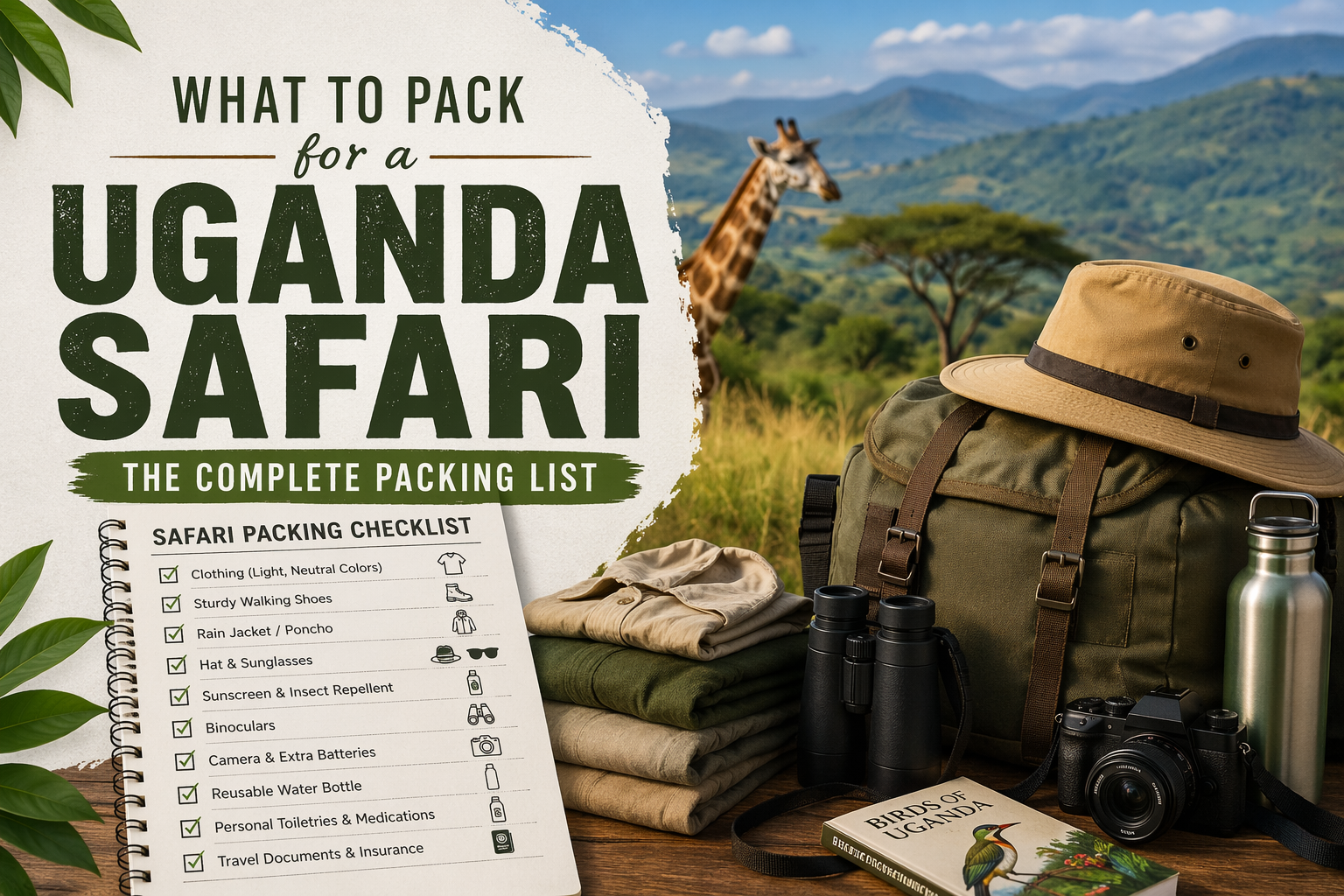
What to Pack for a Uganda Safari: The Complete Packing List
You have booked your gorilla permit. Your lodge is confirmed. The itinerary is a masterpiece of wildlife and wilderness.
Now comes the question that every traveler asks: What on earth do I pack?
Uganda is unlike a beach holiday or a European city break. You will experience freezing mist at 2,500 meters in Bwindi, equatorial afternoon heat on the savannah, sudden downpours that turn dust to mud, and cool elegant evenings at lodges where a simple t-shirt feels out of place.
Pack wrong, and you will be uncomfortable. Pack right, and you will move through your safari with ease, confidence, and style – whether you are kneeling in rainforest mud to photograph a silverback or sipping a sundowner in a private reserve.
This complete Uganda safari packing list is written by experts who have spent hundreds of nights in the bush. We pay attention to detail: lightweight performance fabrics, neutral colors, layering systems, and the little luxuries that transform good trips into unforgettable ones.
Bookmark this page. Print it. Check every box before you zip your bag.
The Golden Rules of Safari Packing
Before we dive into lists, memorize these five principles.
1. Neutral colors only. Khaki, olive, tan, brown, and charcoal. Avoid black (attracts tsetse flies), white (shows every stain), and bright colors (animals see them). Save your red dress for lodge dinners – but never on game drives.
2. Layers, layers, layers. Mornings can be 10°C (50°F), afternoons 28°C (82°F). A typical day: fleece jacket at dawn, t-shirt by midday, sweater again at sunset, and a light jacket for evening.
3. Quick-dry over cotton. Cotton absorbs sweat, stays wet, and chills you when temperatures drop. Synthetic or merino wool dries fast, resists odor, and packs small.
4. Pack half what you think you need. Most lodges offer laundry service.
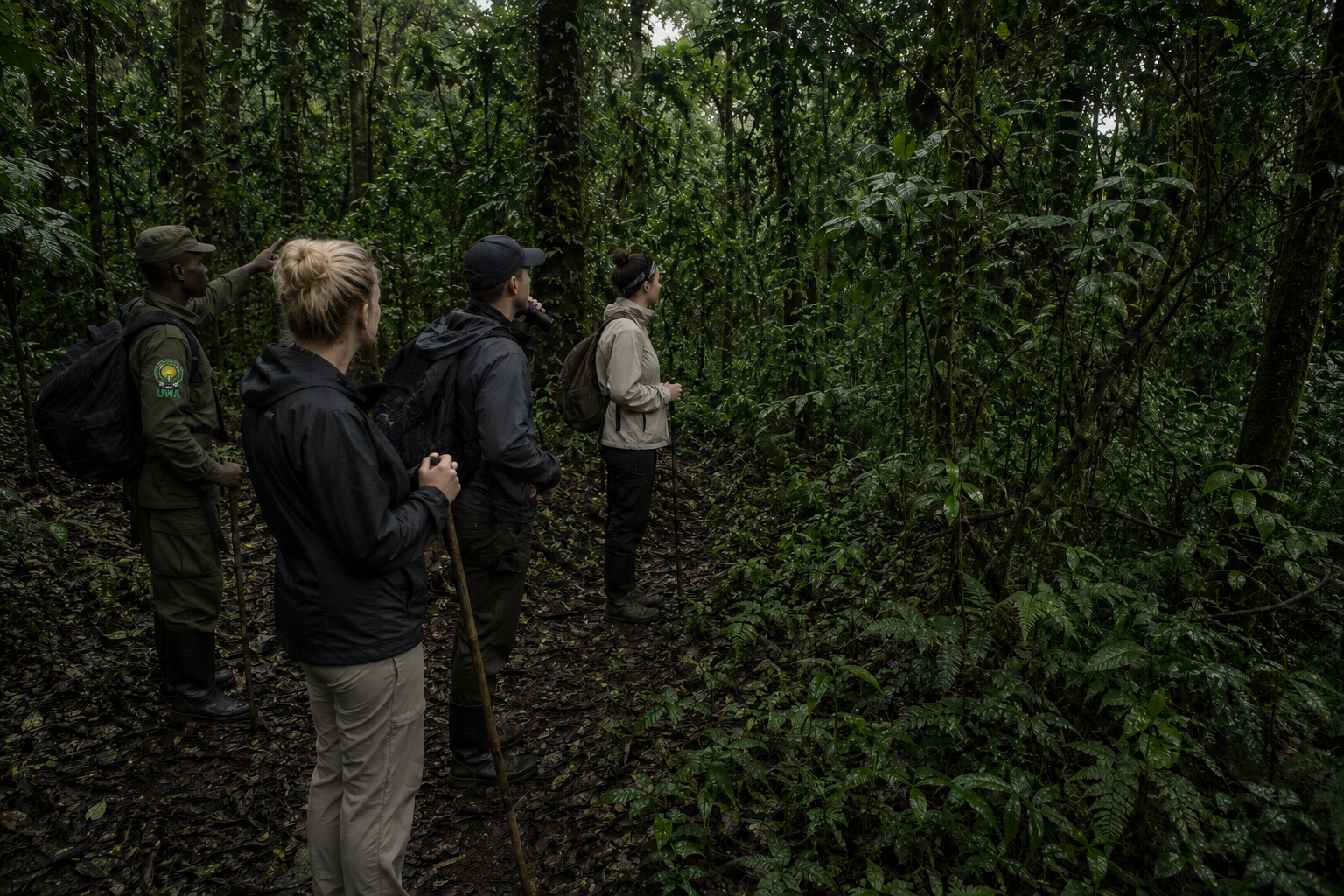
5. Comfort trumps fashion on the trail. During gorilla trekking, you will bushwhack through nettles, slide down muddy slopes, and sit on damp logs. Save your designer pieces for lodge evenings.
Category 1: Clothing for Gorilla Trekking & Chimpanzee Tracking
These are your most physically demanding days. Pack specifically for Bwindi’s dense, wet, steep terrain.
Tops (Upper Body)
| Item | Why You Need It | Tip |
|---|---|---|
| Long-sleeved shirt (2) | Protects arms from stinging nettles and branches | Choose lightweight, breathable, quick-dry fabric (e.g., Patagonia Capilene, Columbia Silver Ridge) |
| Short-sleeved t-shirt (2) | Base layer for warmer days | Merino wool (Icebreaker, Smartwool) resists odor for multiple wears |
| Fleece jacket or lightweight wool sweater (1) | Morning chill before hiking | Zip-neck for easy venting |
| Rain jacket (1) | Non-negotiable. It can rain any day in Bwindi | Gore-Tex or similar breathable waterproof. Ponchos snag on branches. |
| Light puffy or insulated vest (1 optional) | Extra warmth for high-altitude sectors (Ruhija, Nkuringo) | Down or synthetic – packs into its own pocket |
Bottoms (Lower Body)
| Item | Why You Need It | Tip |
|---|---|---|
| Convertible hiking trousers (2 pairs) | Zip-off legs let you adapt to temperature | Look for reinforced knees and seat (you will kneel and sit on damp ground) |
| Lightweight leggings or baselayer bottoms (1) | Under trousers for cold mornings | Merino wool or silk – thin but warm |
| Avoid shorts | Nettles, branches, and biting ants make shorts a mistake | Even in warm weather, wear long trousers for trekking |
Footwear (Most Important Category)
| Item | Why You Need It | Tip |
|---|---|---|
| Sturdy waterproof hiking boots (1 pair) | Essential. Not sneakers. Not fashion boots. | Break them in for at least 20 miles before departure. Brands: Lowa, Meindl, Scarpa, Salomon (Quest 4) |
| Gaiters (1 pair) | Keeps mud, stones, and leeches out of your boots | Short gaiters (ankle to calf) are sufficient. Avoid heavy mountaineering gaiters. |
| Thick wool hiking socks (3–4 pairs) | Prevents blisters. Cushioning matters. | Darn Tough, Smartwool, or Bridgedale. No cotton socks. |
| Camp shoes or sandals (1 pair) | For lodge evenings and boat cruises | Teva, Chaco, or lightweight sneakers |
Accessories for Trekking
| Item | Why You Need It | Tip |
|---|---|---|
| Gardening gloves (1 pair) | Pulling nettles and gripping branches | $5 from a hardware store – throw them away after trekking |
| Wide-brimmed hat (1) | Sun protection on exposed sections | Soft, crushable, with chin strap (wind) |
| Buff or neck gaiter (1) | Protects neck from sun and insects | Also useful as a dust mask on dry savannah roads |
| Sunglasses (1 pair) | UV protection at altitude | Polarized for glare off water during boat cruises |
| Daypack (20–30 liters) | Carries water, snacks, rain jacket, camera | Look for a hip belt and chest strap – you will move a lot |
| Water bottle or hydration reservoir (2 liters) | Hydration is critical | Many lodges provide refillable bottles – ask about plastic-free policies |
Category 2: Clothing for Savannah Game Drives
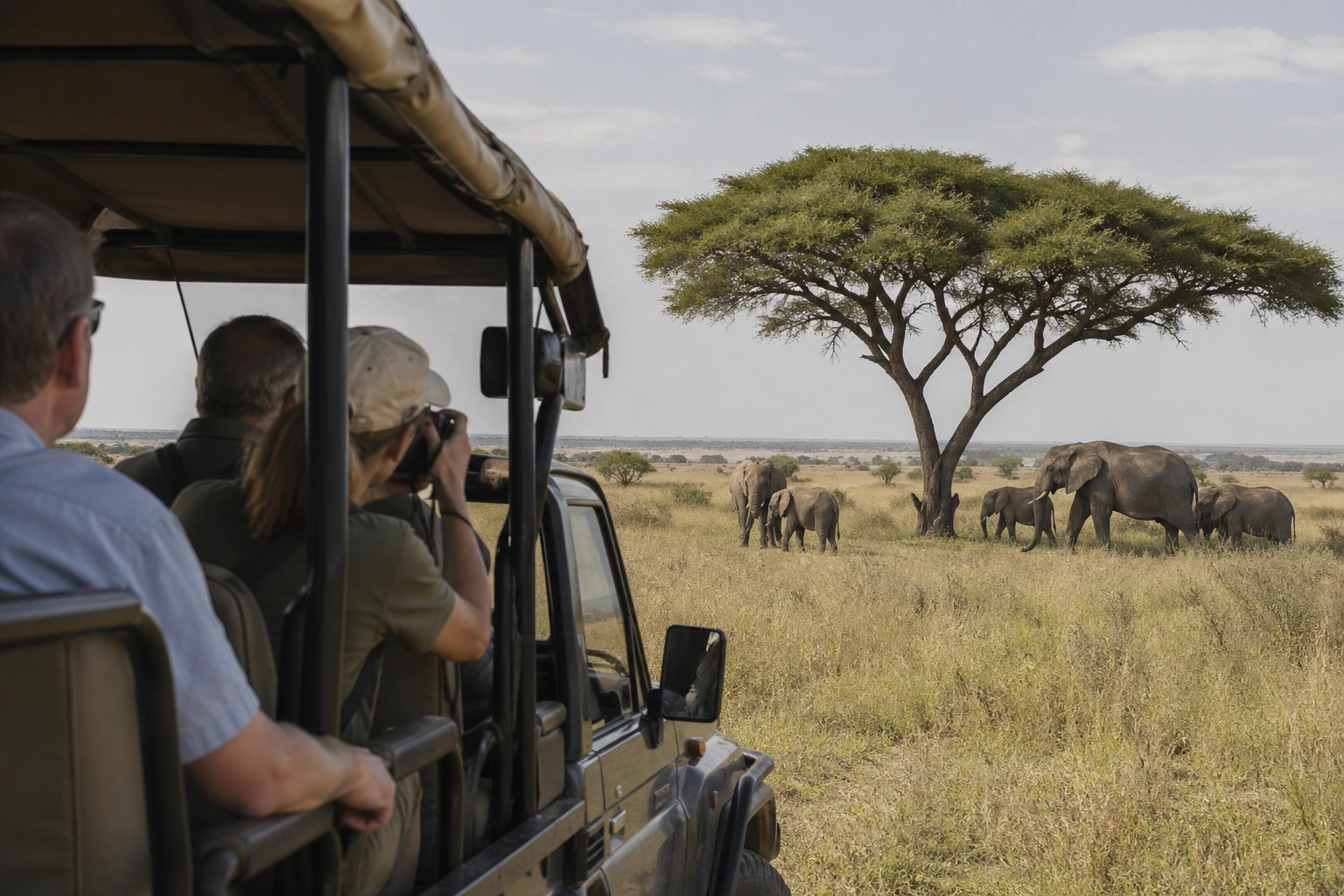
Queen Elizabeth, Murchison Falls, Lake Mburo, and Kidepo are warmer, dustier, and less physically demanding than Bwindi.
Tops
| Item | Why You Need It | Tip |
|---|---|---|
| Short-sleeved t-shirts (3) | Base layer for warm days | Neutral colors only (khaki, olive, tan) |
| Long-sleeved safari shirt (2) | Morning and evening game drives (cooler + sun protection) | Look for vented backs and roll-up sleeves |
| Light fleece or softshell jacket (1) | Early morning game drives are cold in open vehicles | Polartec or similar – breathable but warm |
| Rain jacket (same as above) | Afternoon showers possible even in dry season | Keep it in your daypack |
Bottoms
| Item | Why You Need It | Tip |
|---|---|---|
| Safari trousers (2 pairs) | Comfortable, multiple pockets, quick-dry | Avoid tight jeans – you will sit for hours |
| Shorts (1 pair) | For midday heat at lodges only – not game drives | Keep them knee-length and neutral |
| Leggings or lightweight trousers (1 pair) | For warmer days when you want less bulk | Athletic fabric works well |
Footwear for Game Drives
| Item | Why You Need It | Tip |
|---|---|---|
| Comfortable closed-toe shoes or lightweight hiking shoes (1 pair) | You will get in and out of vehicles frequently | Trail runners or casual walking shoes are fine – no heavy boots needed |
| Sandals (1 pair) | For lodge, pool, or boat cruises | Leather or high-quality synthetic |
Accessories for Game Drives
| Item | Why You Need It | Tip |
|---|---|---|
| Binoculars (1 pair per person) | Essential. Do not rely on your guide's. | 8x42 or 10x42 is ideal. Brands: Swarovski, Leica, Zeiss, Vortex |
| Camera with zoom lens | Wildlife rarely comes close to the vehicle | 200mm minimum, 400mm+ preferred |
| Dust mask or buff | Some roads are extremely dusty in dry season | A dampened buff over nose/mouth helps |
| Sun hat (wide-brimmed) | Open vehicle = direct sun | Same hat as trekking |
| Sunglasses | Glare and dust protection | Polarized |
| Small flashlight or headlamp | Lodge pathways at night | Headlamp leaves hands free |
Category 3: Evening & Lodge Wear (Essential)
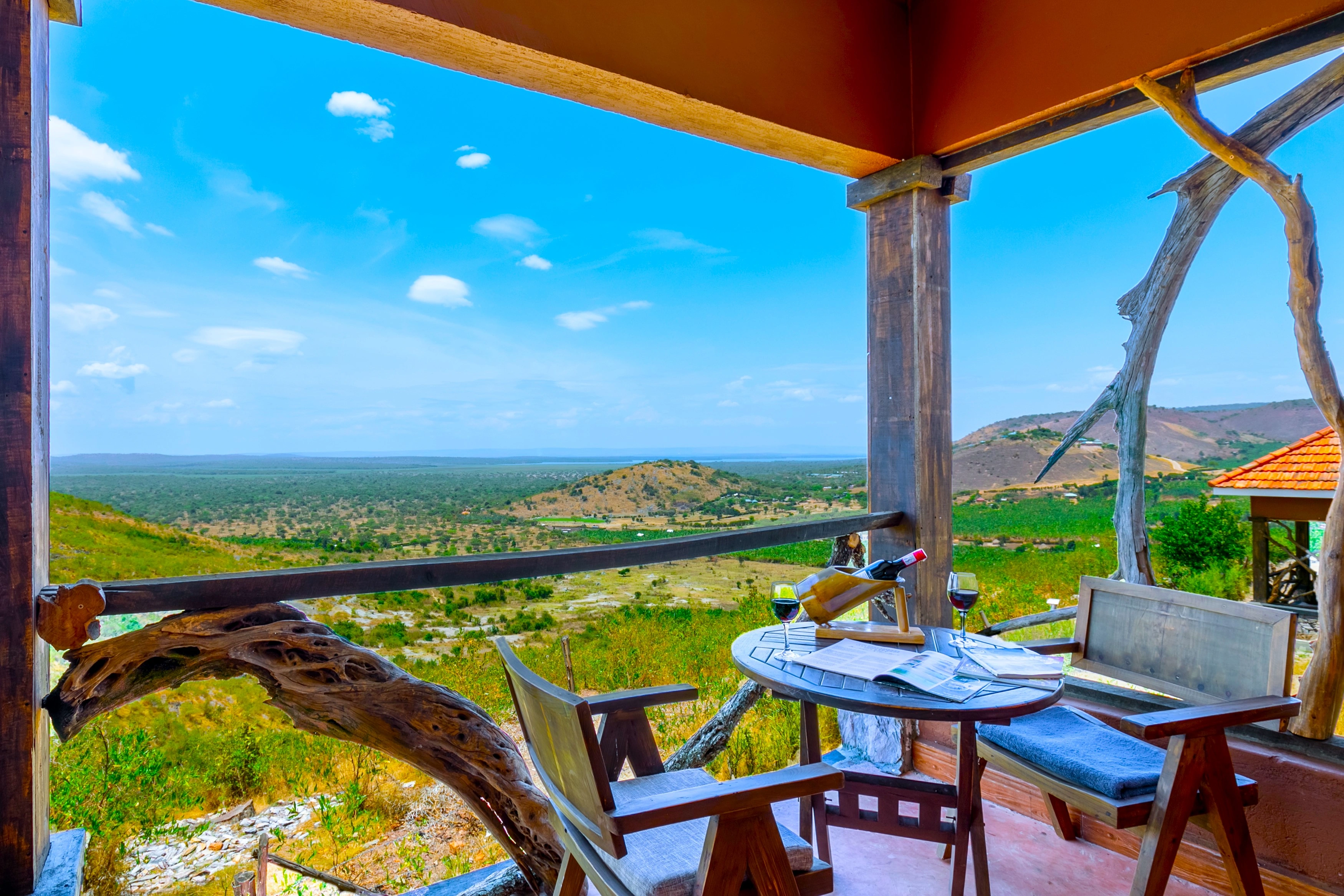
You have spent the day dusty and tired. Now you return to a lodge with a infinity pool, a gourmet chef, and fellow travelers from around the world. You want to feel elegant – but not overdressed.
| Item | Why You Need It | Tip |
|---|---|---|
| Casual but smart outfit (1–2) | Dinner, sundowners, socializing | Men: chinos or dark jeans + collared shirt. Women: casual dress, nice blouse + trousers |
| Comfortable lounge wear (1 set) | Relaxing in your room or lodge common areas | Cashmere sweater? Yes, absolutely. |
| Swimsuit (1) | Many lodges have pools or hot tubs | Quick-dry fabric |
| Warm sweater or wrap (1) | Evenings at high-altitude lodges (Bwindi, Kyaninga) are cold | Merino wool or cashmere |
| Comfortable closed-toe evening shoes | Lodge pathways can be uneven or muddy | Loafers, boat shoes, or clean sneakers |
Note: No formal wear needed. You will never need a jacket and tie or evening gown.
Category 4: Toiletries & Personal Care
Lodges provide high-quality soap, shampoo, conditioner, and lotion. But these items are essential.
| Item | Why You Need It | Tip |
|---|---|---|
| High-SPF sunscreen (30–50) | Equatorial sun is fierce even on cloudy days | Mineral-based (zinc or titanium) is reef-safe |
| Lip balm with SPF | Wind and sun crack lips quickly | Keep in your daypack |
| Insect repellent | Mosquitoes (malaria risk) and other biting insects | DEET (30–50%) or Picaridin. Natural repellents (eucalyptus, citronella) are less reliable in rainforest |
| Anti-itch cream (hydrocortisone or antihistamine) | For insect bites or nettle stings | Small tube |
| Personal medications (plus extras) | Include any prescription meds + basics (pain relief, antidiarrheal, antihistamine) | Keep a 3-day supply in your daypack in case luggage is delayed |
| Malaria prophylaxis | Consult your travel doctor. Uganda has malaria year-round. | Start before departure as prescribed |
| Hand sanitizer (small bottle) | Before meals on game drives | Keep in daypack |
| Wet wipes or face wipes | Removing dust after game drives | Biodegradable preferred |
| Contact lenses & solution / spare glasses | Dust can irritate contacts | Bring glasses as backup |
| Menstrual products (if applicable) | Limited availability in rural Uganda | Bring your preferred brand |
| Small first aid kit | Blister plasters, antiseptic wipes, bandages | Your guide also carries a kit |
Category 5: Electronics & Photography
| Item | Why You Need It | Tip |
|---|---|---|
| Camera body (DSLR or mirrorless) | You will regret relying on a phone | Bring two batteries – cold drains them faster |
| Lenses | Wide-angle (landscapes, lodges) + telephoto (wildlife) | 70-200mm or 100-400mm recommended |
| Extra memory cards (multiple) | You will shoot far more than you expect | 64GB minimum – bring 3–4 cards |
| Battery charger | Lodges have power (universal outlets) | Check voltage – most chargers accept 220V |
| Power bank | For charging phones/cameras during long game drives | 10,000 mAh minimum |
| Universal travel adapter | Uganda uses UK-style plugs (Type G) | Also useful for flights through Dubai, London, or Addis Ababa |
| Smartphone | For quick photos, communication, and safari apps | Download offline maps and bird/animal ID apps before departure |
| Headlamp (as mentioned) | Hands-free light | Petzl, Black Diamond, or similar |
| E-reader or tablet | Downtime between activities | Download books before departure – Wi-Fi is limited |
| Plug-in or battery-powered fan (optional) | Some lodges do not have air conditioning | Small USB fan works wonders |
Category 6: Documents, Money & Essentials
Do not leave home without these.
| Item | Details |
|---|---|
| Passport | Valid for at least 6 months beyond your travel dates |
| Uganda e-visa | Apply online before travel. East Africa tourist visa ($100) allows travel to Kenya and Rwanda as well. |
| Yellow fever vaccination certificate | Required for entry. No certificate, no entry. |
| Gorilla permit copy | Your guide will have originals – bring a backup photocopy. |
| Flight confirmations | Both international and internal charters |
| Lodge and transfer confirmations | Contact details, addresses, check-in times |
| Travel insurance policy | Must cover medical evacuation, gorilla trekking at altitude, and COVID-19. Keep a printed copy and digital copy. |
| Credit cards (2, from different issuers) | Visa and Mastercard are widely accepted. Amex is not. |
| USD cash (new, crisp bills, small denominations) | $100s for major payments, $1s, $5s, $10s, $20s for tips and small purchases. Bills must be from 2013 or later – older or damaged notes are often rejected. |
| Ugandan shillings (UGX) | Withdraw from ATMs in Entebbe or Kampala on arrival |
| Emergency contact numbers | Enjobe Safaris 24/7 hotline, your embassy, travel insurer |
Category 7: Optional but Recommended Luxuries
For travelers who want to elevate every moment.
| Item | Why You Might Want It |
|---|---|
| Compact binoculars (personal) | Your guide has binoculars – but having your own doubles your spotting capacity |
| Travel pillow (neck style) | For charter flights and long road transfers |
| Noise-canceling headphones | Flights and occasional lodge generator noise |
| Reusable coffee cup or water bottle | Some lodges offer barista coffee – enjoy it on your private deck |
| Journal and nice pen | You will want to record details you will otherwise forget |
| Small binoculars or spotting scope (birders) | Serious birders bring their own optics |
| Travel steamer (portable) | Wrinkled clothes from packing? Lodges do not always have irons. |
| Snacks from home | Lodges feed you well – but if you crave specific protein bars or sweets, bring them |
| Binocular harness (not strap) | Much more comfortable for full-day game drives |
What NOT to Pack
Leave these at home.
| Item | Why Not |
|---|---|
| Camouflage clothing | Illegal for civilians in Uganda (reserved for military) |
| Drones | Strictly prohibited in all national parks. Confiscated at entry. |
| Expensive jewelry | Unnecessary attention. Lodges have safes, but why risk it? |
| Hairdryers | Most lodges have them – but voltage differences may cause issues. Check with Enjobe Safaris first. |
| Heavy suitcases | Charter flights have strict weight limits (usually 15–20 kg per person in soft-sided bags). Hard-sided suitcases often not allowed on small aircraft. |
| Plastic bags | Banned in Uganda. Do not bring them. Use reusable bags. |
| Over-the-counter sleeping pills (unfamiliar brands) | You need alertness for early mornings – and some pills interact poorly with altitude or malaria meds. |
Packing by Season: Quick Adjustments
Dry Season (June–August, December–February)
-
Add: Dust mask or buff (roads are dusty), lip balm with SPF, extra sunscreen
-
Reduce: Heavy waterproof jacket (still bring a light rain jacket – afternoon showers possible)
-
Footwear: Boots still needed – dry trails can be slippery with loose dust
Wet Season (March–May, September–November)
-
Add: Extra pair of hiking socks (wet feet), waterproof stuff sacks for electronics, leech socks (available in Uganda but bring if you have space)
-
Heavier rain jacket (Gore-Tex or similar)
-
Umbrella (surprisingly useful for lodge walks between rain showers)
-
Note: Gaiters are non-negotiable in wet season
Sample Packing List (10-Day Safari – Quick Reference)
Clothing (wear on plane + pack):
-
3 short-sleeved shirts (neutral)
-
2 long-sleeved shirts
-
2 safari trousers
-
1 convertible hiking trousers
-
1 fleece jacket
-
1 lightweight puffy (optional)
-
1 rain jacket
-
2 pairs hiking socks
-
3 pairs regular socks
-
1 evening outfit
-
1 swimsuit
-
1 wide-brimmed hat
-
1 buff or neck gaiter
Footwear:
-
1 pair waterproof hiking boots (broken in)
-
1 pair camp shoes / sandals
-
1 pair lightweight shoes for game drives
Gear:
-
Daypack (20–30L)
-
Binoculars
-
Camera + extra batteries + memory cards
-
Headlamp + extra batteries
-
Power bank + adapters
-
Reusable water bottle
-
Gardening gloves
Toiletries & Medical:
-
Sunscreen (SPF 30+)
-
Insect repellent (DEET or Picaridin)
-
Personal medications + malaria prophylaxis
-
Hand sanitizer
-
Wet wipes
-
Lip balm with SPF
-
Anti-itch cream
-
Small first aid kit
Documents & Money:
-
Passport + visa + yellow fever cert
-
Travel insurance (printed + digital)
-
Credit cards (2) + USD cash (new bills, small denominations)
-
Gorilla permit copy
Pro Tips from Enjobe Safaris Guides
Tip 1 – Test your boots before you go. Wear them on rainy hikes at home. Blisters on day one of gorilla trekking will ruin your experience.
Tip 2 – Pack a separate “day one” kit in your carry-on. Include one change of clothes, socks, underwear, basic toiletries, and medications. Checked luggage occasionally arrives a day late on international flights.
Tip 3 – Use packing cubes. You will repack frequently (different lodges, different climates). Cubes save time and reduce stress.
Tip 4 – Leave space for souvenirs. Uganda has exceptional crafts – bark cloth, woven baskets, coffee, and local art.
Tip 5 – Do not stress about forgetting something. Enjobe Safaris vehicles carry first aid kits, insect repellent, sunscreen, and basic sewing kits. Most lodges can supply forgotten toiletries. You are never truly stranded.
Your Packing Questions, Answered
Q: Do I really need gaiters?
A: For gorilla trekking, yes. Leeches are common in Bwindi during wet seasons. Gaiters keep them off your ankles. In dry season, they are optional but still helpful for mud.
Q: Can I wear jeans on safari?
A: Not for trekking (they are heavy, slow to dry, and uncomfortable when wet). For evening wear or game drives in dry conditions, dark jeans are fine.
Q: What about laundry?
A: Most lodges offer same-day or next-day laundry service – often complimentary. Pack for 5 days, not 10.
Q: Are there weight limits for luggage?
A: Yes for charter flights: typically 15 kg (33 lbs) per person in soft-sided bags. Hard-sided suitcases often banned. Enjobe Safaris will confirm limits before your flights.
Q: What if I forget my yellow fever certificate?
A: You may be denied entry at the airport or fined. Keep it with your passport at all times.
Pack Light. Pack Right. Then Forget About It.
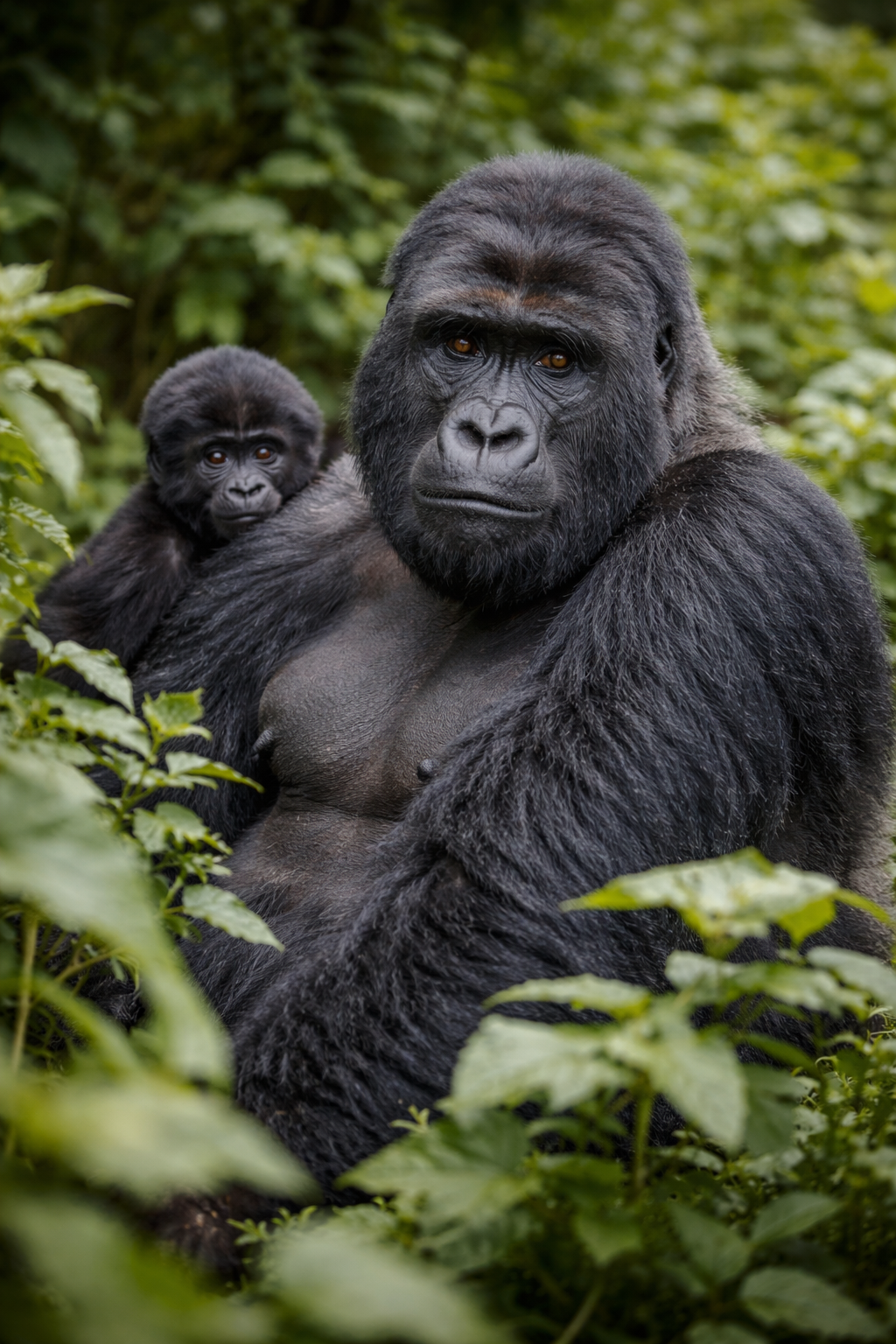
You have planned for months. You have dreamed for longer. Do not let a forgotten headlamp or an uncomfortable pair of boots distract from the silverback’s eyes meeting yours.
This packing list is comprehensive. Print it. Check each box. Then close your suitcase and trust that Enjobe Safaris has prepared for everything else – from the perfect lodge to the expert guide who will carry your daypack when the trail steepens.
Now the only remaining step is the easiest one: a conversation.
Let us discuss your dream itinerary, your preferred travel dates, and your vision of the perfect African safari.
Whether you want a week of gorillas or two weeks crossing the entire country, we will deliver an experience that exceeds every expectation.
Call or Whatsapp Us: +256786795734
Email Us: info@enjobesafaris.com
Let this story become your next safari.
Speak with our specialists to build a tailored itinerary around the experiences you just read about.